
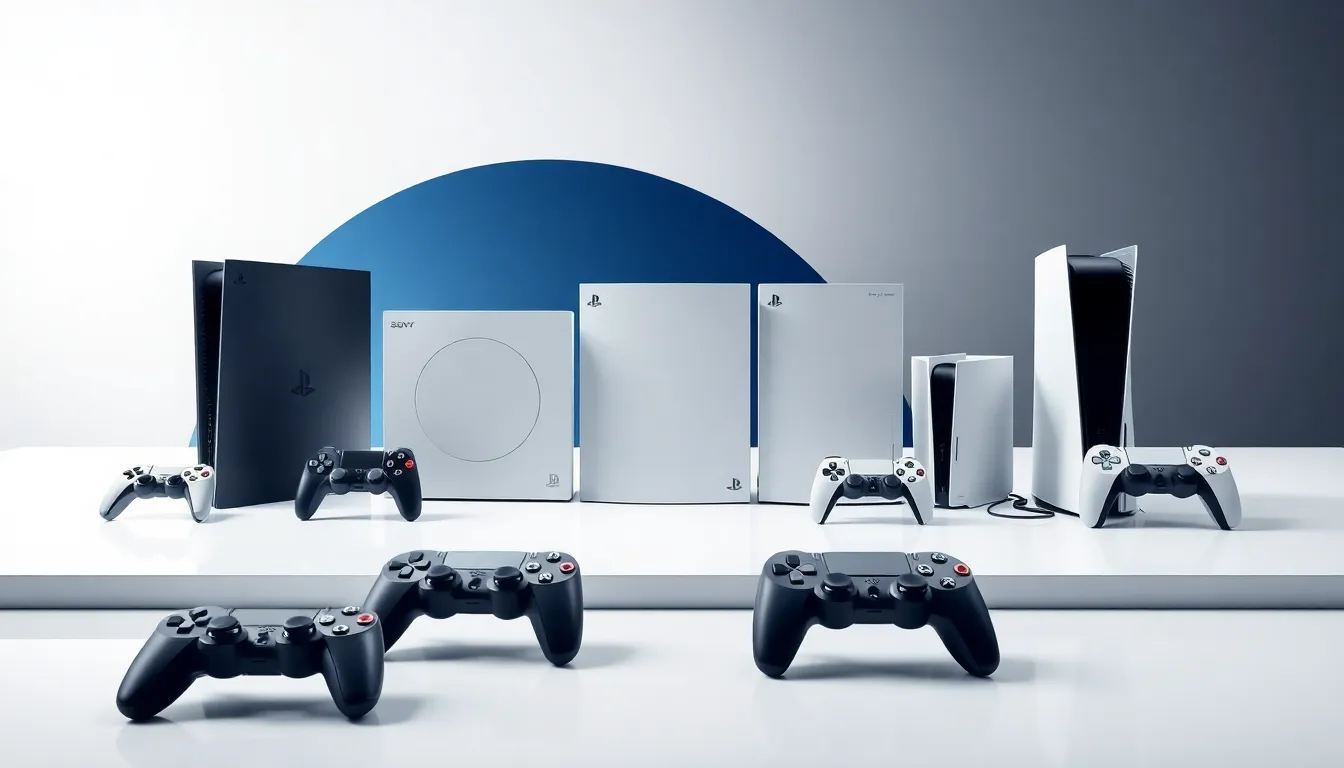
PlayStation examples showcase some of the most influential moments in gaming history. From the original console’s 1994 debut to the PlayStation 5’s cutting-edge technology, Sony has shaped how millions of people play games. The brand has delivered memorable hardware, groundbreaking exclusives, and features that changed industry standards.
This article explores key PlayStation examples across consoles, games, and accessories. Readers will discover which titles defined each generation, how hardware evolved over three decades, and why PlayStation remains a dominant force in gaming today.
Table of Contents
ToggleKey Takeaways
- PlayStation examples span over 30 years of gaming history, from the original 1994 console to the PS5’s cutting-edge technology.
- The PlayStation 2 remains the best-selling console of all time with over 155 million units sold worldwide.
- Iconic exclusive titles like Final Fantasy VII, The Last of Us, and God of War have defined each PlayStation generation and driven hardware sales.
- PlayStation accessories like the DualShock and DualSense controllers introduced industry-changing features such as analog sticks, vibration feedback, and adaptive triggers.
- Sony’s innovations—including CD/DVD gaming formats, PlayStation Network, and the trophy system—have become standard across the gaming industry.
- PlayStation examples demonstrate how Sony creates complete gaming ecosystems through consoles, exclusive games, accessories, and online services.
Evolution of PlayStation Consoles
Sony launched the original PlayStation in Japan on December 3, 1994. This console introduced CD-ROM gaming to a mainstream audience and sold over 102 million units worldwide. The PlayStation examples from this era include 3D graphics capabilities that outperformed competitors like the Sega Saturn.
The PlayStation 2 arrived in 2000 and became the best-selling console of all time with over 155 million units sold. It featured DVD playback, backward compatibility with PS1 games, and an expanded library of titles. This generation cemented Sony’s position as a market leader.
PlayStation 3 launched in 2006 with Blu-ray technology and online multiplayer through PlayStation Network. While it faced stiff competition from the Xbox 360, the PS3 eventually sold 87 million units. Notable PlayStation examples from this era include the introduction of free online play and the Cell processor architecture.
The PlayStation 4 released in 2013 and addressed criticisms of its predecessor. Sony prioritized gaming performance over multimedia features. The PS4 sold over 117 million units and established a strong exclusive lineup that attracted millions of players.
PlayStation 5 debuted in November 2020 with an ultra-high-speed SSD, ray tracing capabilities, and the DualSense controller. As of late 2024, the PS5 has sold over 65 million units globally. These PlayStation examples demonstrate continuous innovation across each console generation.
Iconic Exclusive Game Titles
PlayStation examples often center on exclusive games that define each console generation. These titles drive hardware sales and create lasting cultural impact.
Original PlayStation Era
Final Fantasy VII (1997) brought Japanese RPGs to Western audiences in a major way. The game sold over 13 million copies and established PlayStation as the home for cinematic gaming experiences. Metal Gear Solid (1998) pioneered stealth gameplay and cinematic storytelling. Crash Bandicoot served as Sony’s unofficial mascot during this period.
PlayStation 2 Classics
God of War (2005) introduced Kratos and brutal action gameplay that spawned a franchise. Shadow of the Colossus (2005) demonstrated games could be art. Kingdom Hearts (2002) merged Disney characters with Final Fantasy elements. These PlayStation examples showed the PS2’s range from action to emotional storytelling.
PlayStation 3 Highlights
The Last of Us (2013) delivered a story that matched Hollywood productions. Uncharted 2: Among Thieves (2009) set new standards for action-adventure games. LittleBigPlanet (2008) encouraged user-generated content and creative play.
PlayStation 4 and 5 Standouts
God of War (2018) reinvented the franchise with Norse mythology and over-the-shoulder gameplay. Marvel’s Spider-Man (2018) became the best-selling superhero game at that time. Ghost of Tsushima (2020) offered samurai action with stunning visuals.
On PS5, Astro’s Playroom showcases DualSense features. Demon’s Souls (2020) delivered a remake that highlighted next-gen graphics. Horizon Forbidden West and God of War Ragnarök continue the tradition of PlayStation examples that push technical and storytelling boundaries.
Notable PlayStation Accessories and Features
PlayStation examples extend beyond consoles and games to include accessories and features that shaped gaming.
The DualShock controller debuted with the original PlayStation in 1997. It introduced analog sticks and vibration feedback to console gaming. Every PlayStation generation since has built upon this foundation. The DualSense controller on PS5 adds haptic feedback and adaptive triggers that create new gameplay sensations.
PlayStation VR launched in 2016 as Sony’s virtual reality headset. It sold over 5 million units and brought VR gaming to a wider audience. PlayStation VR2 released in 2023 with improved resolution, eye tracking, and better controllers.
PlayStation Network (PSN) started in 2006 and now serves over 100 million monthly active users. The service provides online multiplayer, digital game purchases, and cloud saves. PlayStation Plus offers tiered subscription options with free monthly games and access to classic titles.
The PlayStation Camera and PlayStation Move controllers expanded input options. Move controllers remain useful for VR games. Remote Play allows users to stream PlayStation games to phones, tablets, and PCs.
These PlayStation examples show how Sony creates ecosystems around its consoles. Each accessory and feature adds value to the core gaming experience.
PlayStation’s Impact on Modern Gaming
PlayStation examples have influenced gaming industry standards in several key areas.
Sony helped establish CD and DVD media as gaming formats. The original PlayStation proved optical discs could replace cartridges. The PS2 drove DVD adoption in millions of households. The PS3 did the same for Blu-ray technology.
Exclusive games raised expectations for production quality. Titles like The Last of Us and Uncharted showed that video games could deliver Hollywood-level storytelling. This pushed competitors to invest more heavily in narrative-driven experiences.
PlayStation normalized digital distribution through the PlayStation Store. While PC gaming had Steam, console players gained access to downloadable games, DLC, and indie titles through PSN. This shift changed how games reach consumers.
The trophy system introduced in 2008 created achievement tracking that added replay value. Gamers now expect similar systems across all platforms. PlayStation examples like this feature demonstrate how Sony innovations become industry standards.
Cross-play support, though initially resisted, now connects PlayStation players with users on other platforms. Sony’s eventual adoption helped make cross-platform gaming more common.
PlayStation has also invested in accessibility options. The PS5 includes features for players with disabilities, reflecting a broader industry push toward inclusive gaming. These PlayStation examples show the brand’s ongoing influence on how games are made and played.