
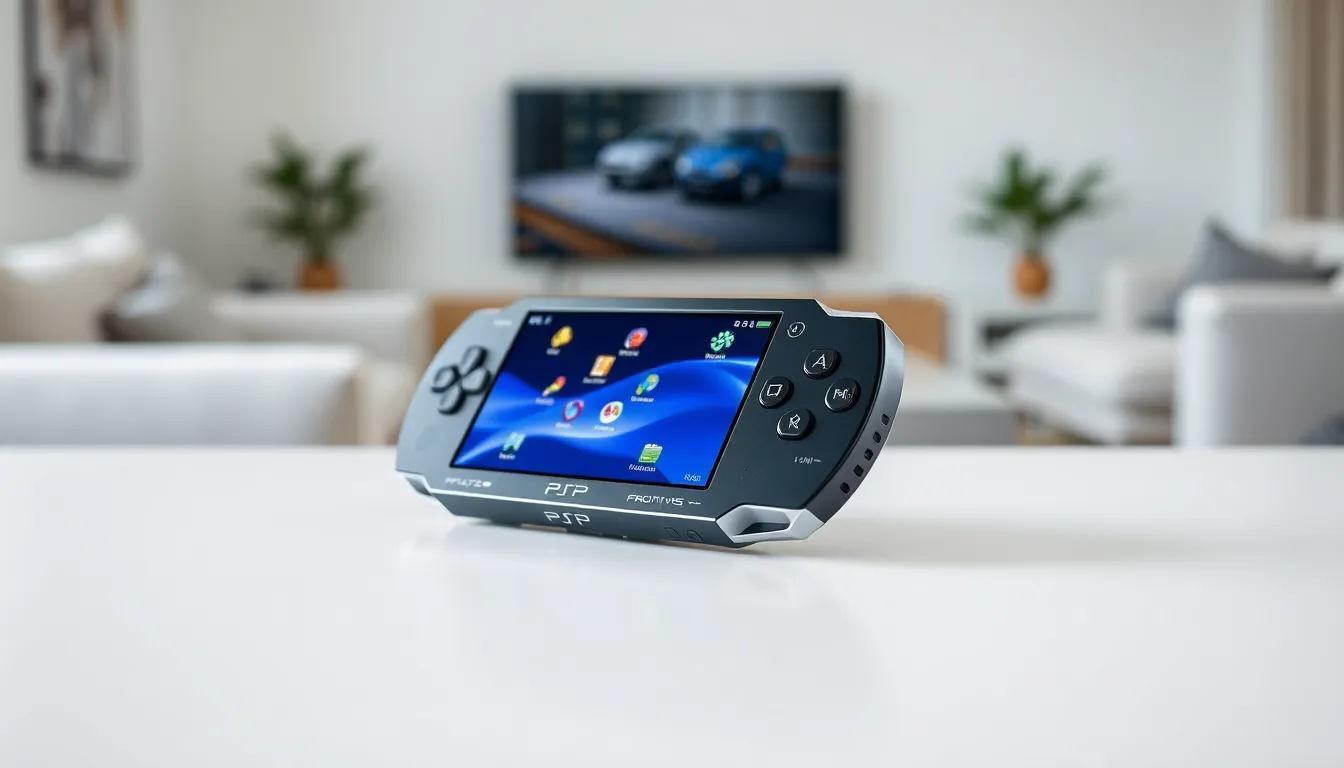
The PlayStation Portable changed how people played video games on the go. Sony launched this handheld console in 2004, and it quickly became a cultural phenomenon. But what is PlayStation Portable exactly, and why does it still matter today?
The PSP was Sony’s first dedicated handheld gaming device. It offered console-quality graphics in a portable format. Players could enjoy full 3D games, watch movies, listen to music, and browse the internet, all from a single device that fit in their pocket.
This guide covers everything about the PlayStation Portable. It explores the system’s history, hardware specs, game library, different models, and lasting influence on portable gaming.
Table of Contents
ToggleKey Takeaways
- The PlayStation Portable (PSP) was Sony’s first handheld gaming console, launched in 2004 and selling over 80 million units worldwide.
- The PSP featured a 4.3-inch widescreen display, Wi-Fi connectivity, and graphics rivaling the PlayStation 2 in a pocket-sized device.
- Sony released five PSP models between 2004 and 2011, including the digital-only PSP Go and the budget-friendly PSP Street.
- The system offered multimedia capabilities including movie playback, music, web browsing, and photos—functioning as an all-in-one entertainment device before smartphones.
- Popular PSP games included God of War, Monster Hunter Freedom Unite, Grand Theft Auto, and Metal Gear Solid: Peace Walker.
- The PlayStation Portable’s legacy influenced modern handheld gaming devices like the PlayStation Vita and Steam Deck, proving portable consoles could deliver home-quality experiences.
Overview and History of the PSP
Sony announced the PlayStation Portable at E3 2003. The company wanted to challenge Nintendo’s dominance in handheld gaming. Nintendo had controlled this market for over a decade with the Game Boy line.
The PSP launched in Japan on December 12, 2004. North America received it on March 24, 2005. Europe followed in September 2005. Sony positioned the device as a premium portable entertainment system, not just a gaming machine.
The PlayStation Portable arrived during a pivotal moment. Mobile phones were becoming more capable, but dedicated gaming handhelds still offered superior experiences. Sony bet that gamers would pay for console-quality visuals in their hands.
That bet paid off. The PSP sold over 80 million units worldwide during its lifespan. It attracted both hardcore gamers and casual users who appreciated its multimedia features. The system remained in production until 2014, giving it a remarkable ten-year run.
Sony’s approach with the PlayStation Portable differed from Nintendo’s strategy. Where Nintendo focused on unique gameplay experiences with the DS, Sony emphasized raw power and visual fidelity. This created a clear choice for consumers based on their priorities.
Key Features and Hardware Specifications
The PlayStation Portable packed impressive technology into its sleek body. The system measured 170mm wide, 74mm tall, and 23mm deep. It weighed approximately 280 grams, light enough for extended play sessions.
Display and Graphics
The PSP featured a 4.3-inch widescreen LCD with 480 x 272 resolution. This display was larger and sharper than any handheld screen at the time. Colors appeared vibrant, and the 16:9 aspect ratio made it perfect for movies.
A custom graphics processor powered the visuals. This chip could render 3D environments that rivaled the PlayStation 2. Games like God of War: Chains of Olympus demonstrated what the PlayStation Portable could achieve graphically.
Processor and Memory
The system ran on a MIPS R4000 CPU clocked at 333 MHz. It included 32 MB of RAM and 4 MB of embedded DRAM. These specs enabled smooth gameplay across demanding titles.
Storage and Media
Sony created the Universal Media Disc (UMD) format specifically for the PSP. These small optical discs held up to 1.8 GB of data. Games, movies, and software all used this proprietary format.
The PlayStation Portable also supported Memory Stick Duo cards for saves and downloaded content. Later models added Memory Stick Micro support. Users could store games, music, photos, and videos on these cards.
Connectivity
Wi-Fi capability set the PSP apart from competitors. Players could connect online for multiplayer gaming, download content, and browse websites. The system also featured an infrared port and USB connectivity for syncing with computers.
Popular Games and Media Capabilities
The PlayStation Portable built an impressive game library over its lifetime. Sony’s first-party studios delivered exclusive experiences designed specifically for the handheld.
Standout Game Titles
God of War: Chains of Olympus and Ghost of Sparta brought the popular franchise to portable play. These action games showcased the PSP’s graphical capabilities while delivering satisfying combat.
Monster Hunter Freedom Unite became a massive hit, especially in Japan. Players spent hundreds of hours hunting creatures with friends via local multiplayer. This game alone drove significant PSP sales in Asian markets.
Grand Theft Auto: Liberty City Stories and Vice City Stories offered open-world adventures on the go. Crisis Core: Final Fantasy VII told an important story within the beloved RPG universe. Persona 3 Portable gave players a definitive version of the acclaimed JRPG.
The PlayStation Portable also received excellent ports. Tekken 6, Metal Gear Solid: Peace Walker, and Ridge Racer demonstrated that home console experiences could work on the handheld.
Multimedia Features
Sony marketed the PSP as more than a gaming device. It played movies on UMD discs and supported video files stored on memory cards. Users could watch their favorite films during commutes or trips.
The system played MP3 and AAC audio files. It displayed JPEG and PNG images. A web browser allowed basic internet access over Wi-Fi. Sony even released a GPS accessory for navigation.
These multimedia features made the PlayStation Portable appealing to non-gamers. It served as an all-in-one entertainment device before smartphones filled that role.
PSP Models and Variations
Sony released several PlayStation Portable models throughout the system’s life. Each version brought improvements while maintaining backward compatibility with existing games.
PSP-1000 (Original)
The launch model established the PSP brand. It featured all the core capabilities that defined the system. Some users found it slightly heavy, and the screen had noticeable ghosting during fast movement.
PSP-2000 (Slim & Lite)
This 2007 revision reduced the weight by 33%. Sony added video-out capability for TV display. The screen quality improved with less ghosting. Internal memory increased slightly, and the system loaded content faster.
PSP-3000 (Brite)
The 2008 model upgraded the screen significantly. It offered better color reproduction, wider viewing angles, and improved contrast. Sony added a built-in microphone for voice chat and Skype calls.
PSP Go (N1000)
This 2009 redesign changed the PlayStation Portable formula. Sony removed the UMD drive entirely. Games came exclusively through digital download. The system featured a sliding screen design and 16 GB of internal storage.
The PSP Go divided opinions. Some appreciated its smaller size and modern approach. Others disliked losing access to their physical game collections.
PSP Street (E1000)
Sony’s final PSP model arrived in 2011 for budget-conscious buyers. It removed Wi-Fi and stereo speakers to cut costs. This model sold primarily in PAL regions as an entry-level option.
Legacy and Impact on Handheld Gaming
The PlayStation Portable left a lasting mark on the gaming industry. It proved that handheld devices could deliver experiences comparable to home consoles.
Sony’s approach influenced future portable gaming. The PlayStation Vita continued many PSP concepts. Modern devices like the Steam Deck owe something to Sony’s vision of powerful portable gaming.
The PSP also shaped how companies think about handheld multimedia. Before smartphones became ubiquitous, the PlayStation Portable showed that people wanted all-in-one entertainment devices. Apple and Android manufacturers took notes.
Third-party developers gained valuable experience creating portable versions of major franchises. The techniques they learned still apply to Switch development and mobile gaming today.
Retro gaming communities keep the PSP relevant. The system’s homebrew scene remains active. Collectors value certain limited edition models. Many classic PSP games still hold up for modern players.
The PlayStation Portable competed successfully against Nintendo’s DS even though selling fewer units. It carved out a distinct market position focused on graphics and mature content. That achievement alone demonstrates its importance in gaming history.