
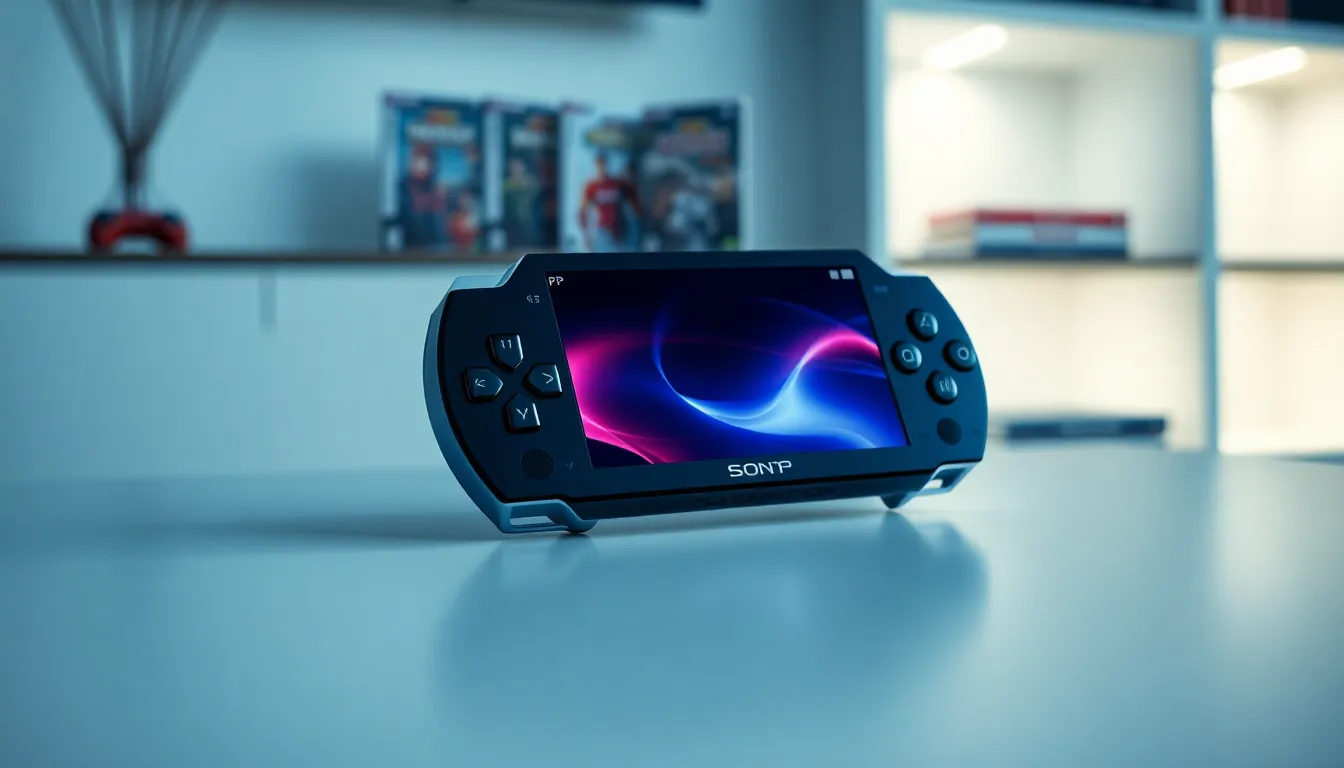
The PlayStation Portable changed handheld gaming forever. Sony released the PSP in 2004, and it quickly became a must-have device for gamers worldwide. This portable console delivered console-quality graphics in a pocket-sized package. It competed directly with Nintendo’s dominance in the handheld market and carved out its own loyal fanbase.
The PlayStation Portable sold over 80 million units during its lifetime. It introduced features that seemed impossible for a handheld device at the time. From multimedia playback to wireless connectivity, the PSP offered more than just gaming. This guide covers everything about Sony’s legendary handheld, its history, hardware, games, and lasting impact on the gaming industry.
Table of Contents
ToggleKey Takeaways
- The PlayStation Portable sold over 80 million units and became Sony’s first successful entry into handheld gaming after launching in 2004.
- The PSP featured a 4.3-inch widescreen display and a 333 MHz processor that delivered near-PlayStation 2 quality graphics in a portable format.
- Sony released five PSP models, with the PSP-3000 widely considered the definitive version due to its improved screen and built-in microphone.
- The PlayStation Portable library includes over 800 games, with standout titles like God of War: Chains of Olympus, Monster Hunter Freedom Unite, and Crisis Core: Final Fantasy VII.
- Beyond gaming, the PSP served as a multimedia device supporting music, photos, videos, Wi-Fi connectivity, and Remote Play with PlayStation 3.
- The PlayStation Portable’s legacy influenced both smartphone gaming design and pushed competitors like Nintendo to innovate with unique features.
History and Development of the PSP
Sony announced the PlayStation Portable at E3 2003. The company wanted to challenge Nintendo’s grip on portable gaming. Ken Kutaragi, often called the “Father of PlayStation,” led the development team. He envisioned a device that could rival home consoles in power and performance.
The PSP launched in Japan on December 12, 2004. North America received the console on March 24, 2005, followed by Europe in September of that year. Sony priced the PlayStation Portable at $249 in the United States, a bold move considering the Nintendo DS launched at $149.
Development of the PSP took several years. Sony engineers faced the challenge of cramming powerful hardware into a compact form factor. They also needed to solve battery life issues without sacrificing performance. The result was a sleek, widescreen device that looked unlike anything else on the market.
The PlayStation Portable represented Sony’s first entry into handheld gaming. The company had dominated home consoles with the PlayStation and PlayStation 2. Bringing that success to the portable market seemed like a natural next step. And even though the higher price point, early sales proved consumers wanted what the PSP offered.
Key Features and Hardware Specifications
The PlayStation Portable featured impressive hardware for its time. Its 4.3-inch widescreen LCD display ran at 480×272 resolution. This screen made the PSP stand out from competitors with smaller, squarer displays. Games and videos looked sharp and vibrant on the widescreen panel.
Under the hood, the PSP ran on a 333 MHz MIPS processor. It included 32 MB of main RAM and 4 MB of dedicated video RAM. These specs allowed the console to run games that approached PlayStation 2 quality. Titles like God of War: Chains of Olympus demonstrated what the hardware could achieve.
The PlayStation Portable used Universal Media Discs (UMDs) as its primary storage format. These small optical discs held up to 1.8 GB of data. Sony also released movies on UMD format, though this initiative never gained mainstream traction. The console supported Memory Stick Duo cards for saves and additional storage.
Connectivity options set the PSP apart from other handhelds. It included built-in Wi-Fi for online multiplayer and web browsing. The device could also connect to PlayStation 3 consoles for Remote Play functionality. USB connectivity allowed file transfers and charging.
Multimedia capabilities made the PlayStation Portable more than a gaming device. Users could play music, view photos, and watch videos. The PSP supported MP4 video files and MP3 audio. Sony positioned the console as an all-in-one entertainment device, and the hardware delivered on that promise.
Popular Games and Software Library
The PlayStation Portable amassed a library of over 800 games during its lifespan. Sony brought major franchises to the handheld, including God of War, Gran Turismo, and Metal Gear Solid. These weren’t watered-down ports, they were full-fledged games built specifically for the PSP.
God of War: Chains of Olympus and Ghost of Sparta remain two of the most acclaimed PSP titles. Developer Ready at Dawn created these games from scratch, delivering brutal combat and stunning visuals. Critics praised both entries as must-play experiences for PlayStation Portable owners.
Monster Hunter Freedom Unite became a phenomenon, especially in Japan. The game sold millions of copies and created a dedicated community of hunters. Players gathered for local multiplayer sessions, forming bonds over challenging hunts. This title alone moved countless PSP units in Asian markets.
Other standout games included Crisis Core: Final Fantasy VII, Lumines, and Daxter. The PlayStation Portable also received excellent ports of classic titles. Persona 3 Portable and Final Fantasy Tactics: The War of the Lions gave players definitive versions of beloved games.
Third-party support remained strong throughout the PSP’s life. Capcom, Square Enix, Konami, and other publishers released quality titles consistently. The diverse library covered every genre, action, RPG, racing, puzzle, and sports. Whatever type of game someone enjoyed, the PlayStation Portable had options.
PSP Models and Variations
Sony released several PlayStation Portable models over the years. Each revision brought improvements and refinements to the original design.
PSP-1000 (Original)
The original PSP-1000 launched in 2004. It weighed 280 grams and measured 170mm wide. This model established the core design language that later versions would follow. Some users found it slightly heavy for extended play sessions.
PSP-2000 (Slim & Lite)
Sony released the PSP-2000 in 2007. This model reduced weight to 189 grams, a 33% decrease. It also added video-out capability and doubled the RAM to 64 MB. The slimmer profile made the PlayStation Portable more comfortable to hold.
PSP-3000
The PSP-3000 arrived in 2008 with an improved screen. Sony upgraded the display for better color reproduction and faster response times. It also added a built-in microphone for voice chat. Many consider this the definitive PSP model.
PSP Go
Sony took a different approach with the PSP Go in 2009. This model eliminated the UMD drive entirely, relying solely on digital downloads. It featured a sliding screen design and weighed just 158 grams. The PlayStation Portable Go also included 16 GB of internal storage. But, its inability to play physical games limited its appeal.
PSP Street (E-1000)
The budget-focused PSP Street launched in Europe in 2011. Sony removed Wi-Fi and the microphone to reduce costs. This model targeted price-conscious consumers in emerging markets.
Legacy and Impact on Handheld Gaming
The PlayStation Portable changed what gamers expected from handheld devices. Before the PSP, portable gaming meant simpler graphics and shorter experiences. Sony proved that console-quality games could work on the go.
The PSP influenced smartphone gaming in unexpected ways. Its multimedia focus and widescreen display predicted where mobile devices would head. When Apple released the iPhone, some observers noted similarities in approach. Both devices aimed to be more than single-purpose gadgets.
Sony’s handheld also pushed Nintendo to innovate. The DS succeeded through its unique dual-screen design rather than raw power. This competition benefited gamers on both platforms. Each company had to keep improving to stay relevant.
The PlayStation Portable paved the way for the PlayStation Vita. Sony’s next handheld built on lessons learned from the PSP. Though the Vita sold fewer units, it maintained a passionate fanbase. Many Vita features, like remote play and digital distribution, originated with the PSP.
Piracy significantly impacted the PlayStation Portable’s later years. Custom firmware allowed users to play illegally downloaded games. This hurt software sales and discouraged some developers from supporting the platform. Sony struggled to address this problem throughout the PSP’s lifespan.
Even though these challenges, the PSP remains beloved by retro gaming enthusiasts. Its game library holds up remarkably well. Many titles never received ports or remasters, making the original PlayStation Portable the only way to play them. Collectors continue to seek out PSP games and hardware today.