PlayStation vs Xbox remains one of gaming’s longest-running debates. Both Sony and Microsoft have built powerful consoles with loyal fan bases. The PlayStation 5 and Xbox Series X represent the latest generation in this ongoing competition. Each console offers distinct advantages that appeal to different types of gamers. This guide breaks down the key differences between PlayStation and Xbox. Readers will find clear comparisons of hardware, games, online services, and pricing. By the end, choosing the right console becomes a much simpler decision.
Table of Contents
ToggleKey Takeaways
- PlayStation vs Xbox comes down to exclusive games, with Sony offering acclaimed single-player titles while Microsoft’s Game Pass delivers unmatched subscription value.
- The Xbox Series X has slightly more raw power (12 vs 10.28 teraflops), but the PlayStation 5’s DualSense controller provides unique immersive haptic feedback.
- Xbox Game Pass Ultimate offers day-one access to all first-party releases for $17/month, making it ideal for gamers who play many different titles.
- Both consoles share the same $499 price point, with budget options available: PS5 Digital Edition at $449 and Xbox Series S at $299.
- Third-party games perform nearly identically on both platforms, so the PlayStation vs Xbox decision matters most for exclusive games and subscription preferences.
- Your gaming habits should guide your choice—PlayStation excels for story-driven exclusives today, while Xbox offers better long-term value through Game Pass.
Hardware and Performance Comparison
The PlayStation 5 and Xbox Series X share similar hardware foundations. Both consoles use custom AMD Zen 2 processors and RDNA 2 graphics architecture. They support 4K gaming at up to 120 frames per second. Ray tracing technology appears on both platforms, creating realistic lighting and reflections.
The Xbox Series X edges ahead in raw power specifications. It delivers 12 teraflops of GPU performance compared to the PlayStation 5’s 10.28 teraflops. Microsoft’s console also includes 1TB of internal storage versus Sony’s 825GB SSD. But, the PlayStation 5’s custom SSD boasts faster read speeds at 5.5GB/s.
Sony’s PlayStation vs Xbox approach focuses on the DualSense controller. This controller features haptic feedback and adaptive triggers. These innovations create immersive gameplay sensations that Xbox controllers don’t match. Players feel tension when drawing a bow or resistance when driving through mud.
The Xbox controller maintains its familiar ergonomic design. It includes a textured grip and improved D-pad. Microsoft also offers the Elite Series 2 controller for competitive gamers. Both consoles support backward compatibility, though Xbox extends this feature across four generations of games.
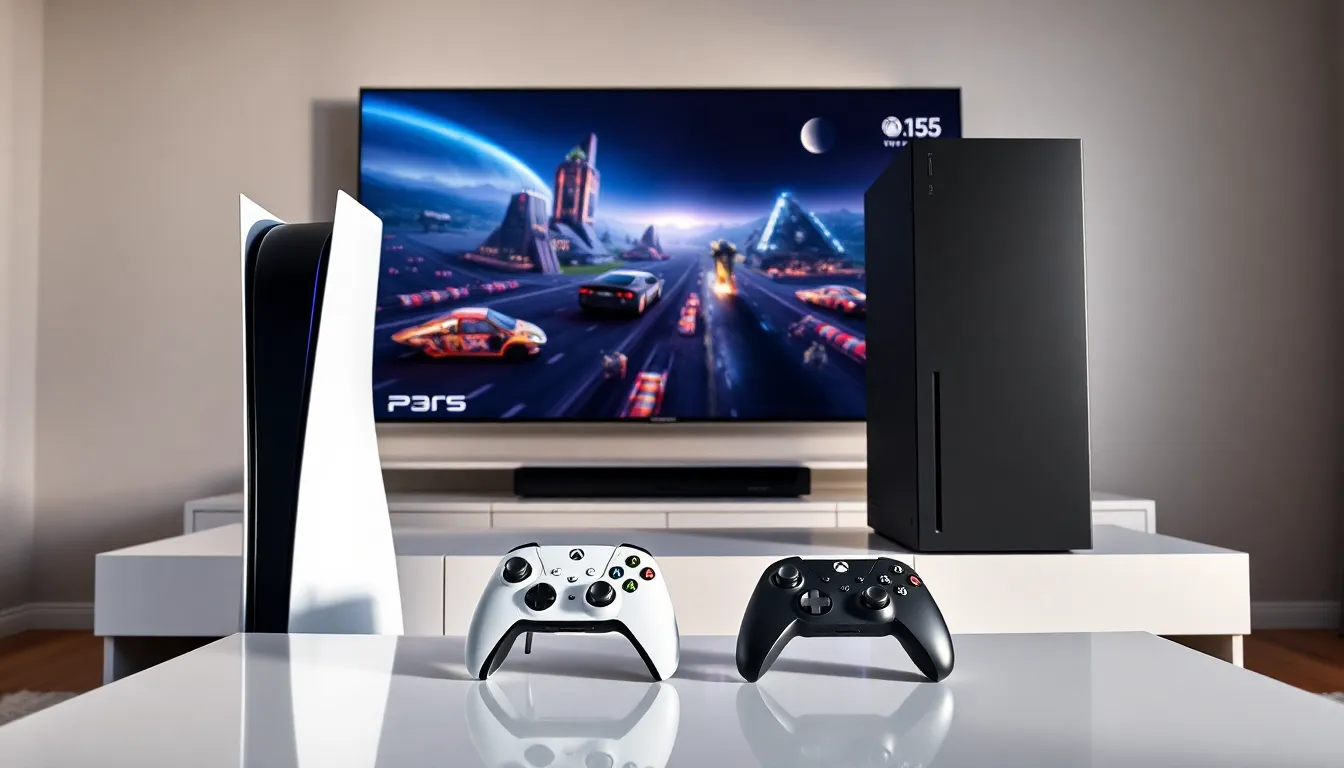
Physical design sets these consoles apart visually. The PlayStation 5 features a bold white-and-black curved aesthetic. The Xbox Series X takes a minimalist tower approach in solid black. Personal preference guides most buyers on design, though the PS5 requires more shelf space.
Exclusive Games and Library
Exclusive games often determine the PlayStation vs Xbox winner for many buyers. Sony has built its reputation on single-player story-driven experiences. Franchises like God of War, Spider-Man, The Last of Us, and Horizon define PlayStation gaming. These titles consistently earn critical acclaim and strong sales.
Microsoft took a different approach by acquiring major studios. Bethesda, Activision Blizzard, and other purchases expanded Xbox’s first-party lineup. Starfield, the next Elder Scrolls, and future Call of Duty games now fall under Microsoft’s umbrella. This strategy promises a strong exclusive library in coming years.
The PlayStation vs Xbox debate shifts when considering current availability. Sony offers more polished exclusives ready to play today. Xbox’s major acquisitions haven’t fully materialized into exclusive releases yet. Gamers wanting immediate access to top-tier exclusives lean toward PlayStation.
Xbox Game Pass changes the value equation significantly. This subscription service provides access to hundreds of games, including all first-party titles at launch. PlayStation’s Game Catalog offers similar functionality but doesn’t include new releases on day one. The library access model differs substantially between platforms.
Third-party games appear on both consoles with minimal differences. Cross-platform titles like EA Sports FC, Grand Theft Auto, and Elden Ring perform similarly. The PlayStation vs Xbox choice matters less for gamers focused primarily on multiplatform releases.
Online Services and Subscriptions
Online gaming requires paid subscriptions on both platforms. PlayStation Plus and Xbox Game Pass Core serve as entry-level tiers. These services enable multiplayer access and provide monthly free games. Both cost roughly $60 annually at the basic level.
Xbox Game Pass Ultimate represents Microsoft’s premium offering. At $17 monthly, subscribers receive Game Pass, online play, EA Play, and cloud gaming. The service includes day-one access to all Xbox first-party releases. This value proposition attracts budget-conscious gamers.
PlayStation offers a tiered approach with three subscription levels. PlayStation Plus Essential covers basic online features. Extra adds a game catalog with hundreds of titles. Premium includes classic games and cloud streaming capabilities. The top tier costs $18 monthly.
Cloud gaming separates these platforms in meaningful ways. Xbox Game Pass Ultimate includes streaming to phones, tablets, and browsers. PlayStation’s cloud gaming requires the Premium subscription tier. Microsoft’s head start in cloud infrastructure shows in this area.
The PlayStation vs Xbox competition extends to free-to-play games. Both platforms allow games like Fortnite and Warzone without subscription fees. Party chat and social features work similarly across both ecosystems. Friends lists and messaging perform equivalently on PlayStation and Xbox.
Family sharing options exist on both consoles. Xbox allows game library sharing between designated home consoles. PlayStation offers similar functionality through primary console settings. Parents managing multiple gamers find comparable options on either platform.
Price and Value for Money
Console pricing positions these competitors similarly in the market. The PlayStation 5 standard edition retails at $499. The Xbox Series X matches that price point exactly. Digital-only versions offer lower entry costs on both platforms.
The PlayStation 5 Digital Edition costs $449. Xbox Series S provides an even cheaper option at $299. The Series S sacrifices disc drive and some performance capabilities. Budget-conscious buyers find the Series S attractive even though its limitations.
Game pricing follows industry standards on both platforms. New releases typically cost $70 for major titles. Sales occur regularly through digital storefronts. PlayStation and Xbox both offer subscription services that reduce per-game costs.
The PlayStation vs Xbox value calculation depends on gaming habits. Gamers who play many different titles benefit most from Game Pass. Those who focus on a few games annually may prefer buying titles outright. Subscription math varies by individual playing patterns.
Accessory costs add up quickly on either platform. Extra controllers cost $70-80. Storage expansion cards run $150-200 for quality options. Headsets, charging docks, and other peripherals carry similar prices across ecosystems.
Long-term value favors neither console decisively. Both manufacturers sell hardware at minimal margins. Software, subscriptions, and accessories generate primary revenue. Choosing PlayStation vs Xbox based purely on initial price ignores the larger financial picture.